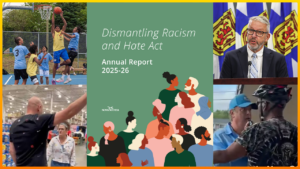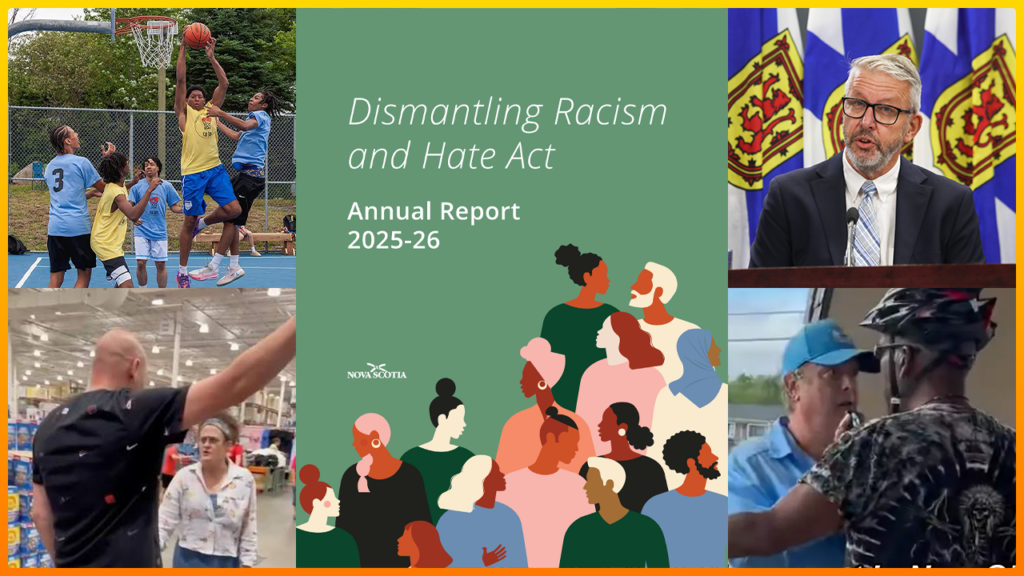
The Province has released its latest annual report under the Dismantling Racism and Hate Act. Here’s What It Says, and What Black Nova Scotians Should Watch Going Forward
Each year, under Nova Scotia’s Dismantling Racism and Hate Act, the provincial government is required to report publicly on the progress it says it is making toward addressing systemic racism, advancing equity, and reducing hate across government.
The latest annual report, tabled this week, spans approximately 20 pages and outlines work undertaken by the Office of Equity and Anti-Racism, along with dozens of initiatives across provincial departments.
Like many government reports, it is both informative and incomplete.
It provides an extensive catalogue of programs, funding announcements, partnerships, consultations, and policy initiatives. At the same time, it leaves important questions about outcomes, accountability, and implementation largely unanswered.
For Black Nova Scotians, the report is worth reading, not simply for what it says, but for the questions it invites.
What the Report Highlights
The report points to a broad range of initiatives the Province says are helping advance equity and combat systemic racism.
Among the more significant highlights are:
* Continued funding for the African Nova Scotian Justice Institute (ANSJI)
* Continued work on environmental racism
* Ongoing development of a provincial race-based data standard
* Mandatory Equity and Anti-Racism Plans for municipalities
* Expansion of Africentric youth and skilled trades initiatives
* Investments in supportive housing serving African Nova Scotian communities
* Expansion of newcomer and culturally responsive health programs
* New emergency preparedness initiatives in African Nova Scotian communities
* Changes to Employment Support and Income Assistance policies intended to reduce systemic barriers
* Nova Scotia’s first provincial 2SLGBTQIA+ Action Plan
Taken together, the report presents these initiatives as evidence of a government-wide effort to embed equity and anti-racism throughout provincial departments.
Many of these initiatives represent meaningful investments and policy commitments.
But announcements and investments are only part of the story.
Programs Are One Thing. Outcomes Are Another.
One theme quickly becomes apparent throughout the report.
Government repeatedly highlights that it has:
* launched programs
* funded initiatives
* consulted communities
* established partnerships
* created action plans
* delivered training
* developed policies
Those are all important steps.
What the report spends considerably less time demonstrating is whether those initiatives have produced measurable improvements in people’s lives.
Readers will find relatively little discussion of questions such as:
* Have racial disparities narrowed?
* Have educational outcomes improved?
* Has housing affordability improved for African Nova Scotians?
* Have employment gaps decreased?
* Have justice outcomes changed?
* Are communities experiencing less systemic discrimination than before?
An annual report documenting government activity is valuable.
An annual report demonstrating measurable change is even more valuable.
The distinction matters.
Consultation Is Important. So Is Following Through.
Throughout the report, government repeatedly emphasizes consultation.
Communities were consulted.
Organizations were engaged.
Partnerships were formed.
Meetings were held.
Listening took place.
Those efforts are important.
But they naturally raise another set of questions.
Readers may reasonably ask:
* What recommendations came from those consultations?
* Which recommendations have been implemented?
* Which remain outstanding?
* Which recommendations were not adopted?
* Why?
The report celebrates engagement.
It provides much less information about how community recommendations translated into government action.
For many readers, that may become one of the most important questions moving forward.
Environmental Racism
The report notes continued work on environmental racism, including approximately $935,000 for another phase of engagement with affected communities over the next two years.
That work may prove valuable.
It also exists within a broader context.
Nova Scotia has already established an Environmental Racism Panel whose work became the subject of public controversy after its report was leaked before being officially released.
Against that backdrop, some readers may ask whether another extended period of consultation represents necessary community engagement or a slower-than-expected pace toward implementation.
The report itself does not address that debate.
Race-Based Data
The report also notes that work continues on developing a provincial race-based data standard.
Collecting consistent race-based data has long been recognized as important for identifying and measuring systemic inequities.
At the same time, this work has been underway for several years and has previously been the subject of criticism regarding the pace of implementation.
The report confirms the work is continuing but offers little indication of when the standard will be fully operational.
Education: Important Context
The report cites Dalhousie’s Transition Year Program (TYP) and briefly references the Indigenous Blacks & Mi’kmaq (IB&M) Initiative as examples of efforts to improve equitable access to post-secondary education. It notes that TYP provides a pathway into undergraduate studies and that IB&M supports Indigenous and Black students pursuing law degrees.
Those programs deserve recognition.
They also deserve context.
Earlier this year, provincial budget documents showed the elimination of direct provincial funding for the Transition Year Program and a significant reduction to funding for the Indigenous Blacks & Mi’kmaq Initiative.
Those proposed reductions prompted widespread concern from community organizations, educational leaders, opposition MLAs, students, and members of the public.
Following that public backlash, the Province restored funding affecting several African Nova Scotian and Indigenous initiatives.
The annual report acknowledges both programs as part of its broader discussion of equitable access to post-secondary education.
It does not mention the funding controversy that preceded those restorations.
That context matters because it demonstrates how public engagement can influence public policy.
African Nova Scotian Justice Institute
The report identifies continued provincial funding for the African Nova Scotian Justice Institute as one of the government’s significant investments in addressing anti-Black racism within the justice system.
That funding is substantial.
At the same time, some members of the African Nova Scotian community have raised ongoing questions regarding the Institute’s public visibility, communications, governance, and overall accountability.
Those discussions exist independently of the funding itself.
As with many organizations receiving public funding, long-term public confidence depends not only on investment, but also on transparency and measurable public impact.
One Pattern Worth Noticing
Perhaps the biggest takeaway from the report is that it is primarily a report about activity.
It documents:
* programs launched
* grants awarded
* partnerships established
* committees formed
* consultations held
* funding announced
What it documents much less frequently is whether those activities produced measurable results.
That distinction does not diminish the importance of the work described.
It simply reminds readers that government activity and community outcomes are not the same thing.
What Black Nova Scotians May Wish to Ask
Whether or not you choose to read the full report, there are several questions worth keeping in mind over the coming year.
* Which commitments are genuinely new, and which have appeared in previous annual reports?
* Which consultations have resulted in concrete policy changes?
* Which recommendations remain outstanding?
* Which initiatives are being measured by real-world outcomes rather than announcements?
* Where is progress being measured, and where is it simply being described?
* Which programs continue to receive stable support, and which remain vulnerable to future budget decisions?
These questions are not intended to dismiss the work being done.
They are intended to strengthen public accountability.
Why This Report Matters
Government reports like this serve an important purpose.
They establish a public record of commitments.
They create benchmarks against which future governments — and future reports — can be measured.
The real test, however, will not be how many initiatives appear in next year’s report.
It will be whether Black Nova Scotians can point to measurable improvements in education, health, housing, justice, economic opportunity, and everyday experiences with public institutions.
Announcements matter.
Investments matter.
Consultation matters.
But ultimately, progress is measured not by the number of initiatives launched, but by whether those initiatives improve people’s lives.
For that reason alone, this report deserves to be read, not as the final word on equity and anti-racism in Nova Scotia, but as one document in an ongoing conversation about what progress looks like, how it should be measured, and who gets to decide whether it has been achieved.
** Initial draft created with the assistance of AI tools**
👉 Read the full report: CLICK HERE
👉 To download the report, click here: dismantling-racism-and-hate-act-annual-report-en