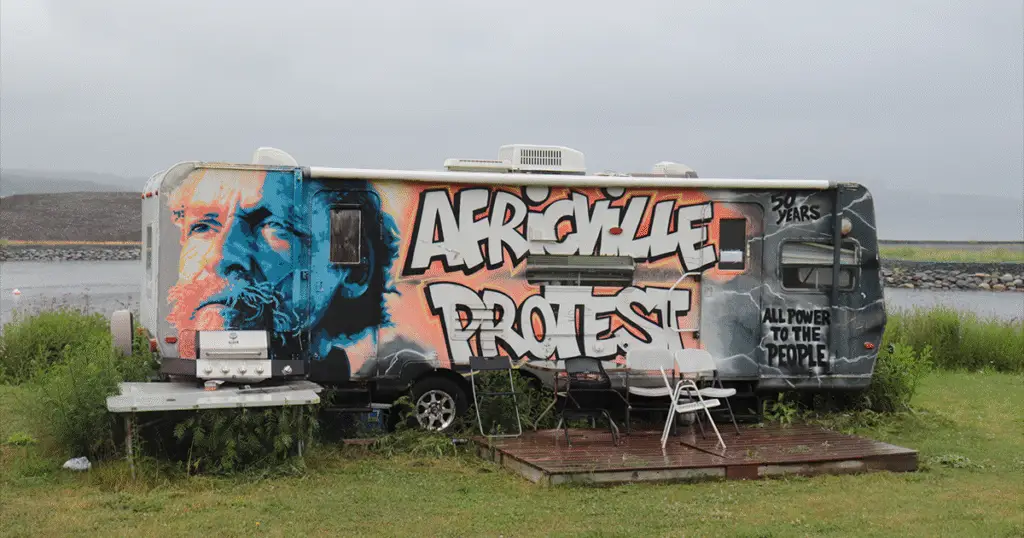
For years, Black and Mi’kmaq communities in Nova Scotia have known what governments were slow to admit: environmental harm in this province has not been randomly distributed. Landfills, dumps, polluted waterways, industrial zoning, and neglect have disproportionately landed in Indigenous and Black communities — often with full government knowledge.
That reality finally forced action when Nova Scotia committed to studying environmental racism through a provincially legislated panel. What followed, however, has been a familiar pattern: acknowledgment, delay, and damage control.
This is what actually happened.
The panel and the promise
In 2023, the Government of Nova Scotia struck an Environmental Racism Panel under its environmental and climate-change framework. The panel included Mi’kmaq and African Nova Scotian voices and was tasked with delivering findings and recommendations by the end of 2023.
The expectation was straightforward: communities that had lived the harm would finally see transparency, accountability, and action.
That didn’t happen.
What communities heard — before anything was released
By early to mid-2025, media and opposition MLAs were already referencing the panel’s conclusions. This wasn’t because the report had been released. It was because information from the report had leaked.
Reporting by outlets including the Halifax Examiner and CBC News confirmed that:
The government would not say when it received the panel’s recommendations
The justice minister at the time would not clearly confirm whether she had read them
The report was not being made public, despite repeated questioning
When pressed, Premier Tim Houston publicly acknowledged that someone had leaked the report — a telling admission that the findings were circulating outside official channels while communities were still being kept in the dark.
The “release” — after the damage was done
In November 2025, the province finally posted a draft report dated June 2024. That timing mattered. It confirmed what many already suspected: the findings had existed for well over a year.
Reporting around the posting noted that:
The province still would not clearly say when it received the draft or final versions
The report included recommendations for:
A formal definition of environmental racism
Public tracking and reporting
Greater resources for affected communities
A formal provincial apology acknowledging harm
Opposition MLAs described the delay as embarrassing. Community advocates described it as disrespectful. And for many Black Nova Scotians, the late posting didn’t feel like transparency — it felt like containment after a leak.
Why the leak matters
This wasn’t just about procedure. It was about power.
When governments delay reports that document harm to Black and Indigenous communities, they control:
Timing (when people find out)
Framing (how the story is told)
Pressure (how long communities are expected to wait)
The leak disrupted that control. And the subsequent posting of a “draft” didn’t erase the fact that Nova Scotians learned about the report because it slipped out, not because it was shared.
What Black Nova Scotians should take from this
As Black History Month approaches — a season heavy on speeches, land acknowledgements, and carefully worded commitments — this episode offers some clarity.
Here are the takeaways:
Acknowledgment without urgency is not justice
Governments can agree something exists and still stall on fixing it.Process can be used as a shield
“Consultation,” “sequencing,” and “review” are often deployed to slow accountability, not strengthen it.Leaks happen when transparency fails
Communities shouldn’t have to rely on leaks to learn what governments already know about harm done to them.Apologies mean nothing without timelines and enforcement
A formal apology matters — but only if it’s paired with measurable action, funding, and public reporting.Watch what happens after Black History Month
The real test is whether commitments survive March, budgets, and election cycles.
What to watch next
Black Nova Scotians should be watching for:
A final report, not just drafts
A binding definition of environmental racism that affects approvals and land-use decisions
Public progress reporting, not one-time statements
Whether affected communities are resourced — not just thanked
Environmental racism in Nova Scotia is not a historical footnote. It’s a present-day policy issue with living consequences.
And as this episode shows, progress doesn’t just depend on what governments say — it depends on how hard communities insist on seeing the full truth, on time, and in public.