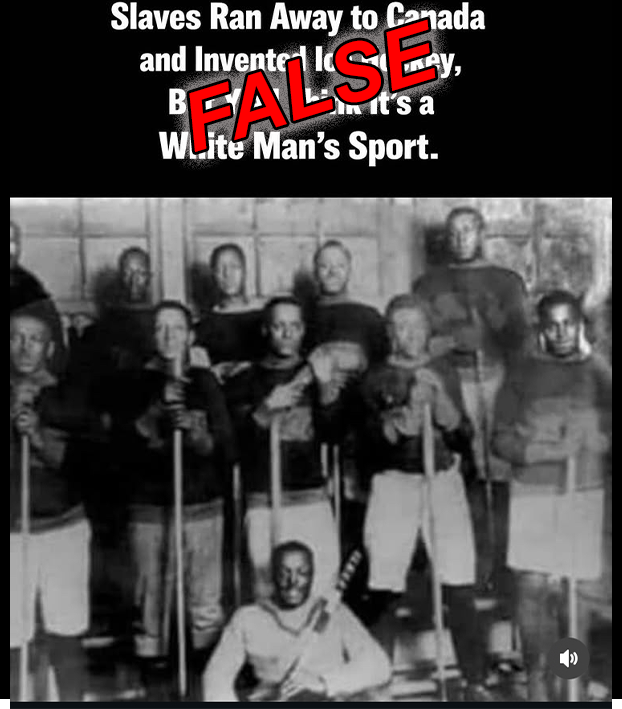
 There’s a black-and-white photo that circulates on social media every so often, sometimes every year, especially during Black History Month. It’s usually paired with a bold claim along the lines of: runaway slaves came to Canada and invented ice hockey.
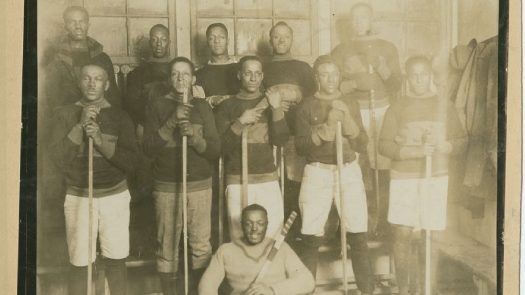
The image is typically identified as players from the Colored Hockey League of the Maritimes. And while the photo itself is real, the caption attached to it often isn’t.
This isn’t about nitpicking or shaming anyone. The impulse behind the post is understandable: to remind people that Black history is deeper, older, and more foundational than it’s often portrayed. But if we’re going to tell that story, especially at the end of Black History Month, we owe it to ourselves to get the basics right.
What the Colored Hockey League actually was
The Colored Hockey League was founded in 1895 in Nova Scotia, largely organized through Black Baptist churches. It existed decades before the NHL and helped formalize early styles of play that resemble modern hockey.
That history is well documented, including in the book Black Ice, which traces the league’s origins, teams, and players in detail.
What the league was not was a group of formerly enslaved people who had just arrived in Canada.
The timeline matters
Slavery in the United States ended in 1865. The Colored Hockey League began 30 years later, in 1895.
That gap matters.
Most competitive hockey players in 1895 would have been young men — roughly in their late teens to early thirties — meaning they were born after slavery had ended or right at its tail end. Someone born enslaved in the 1850s would have been in their forties by the time the league formed. Possible to still skate? Maybe. Likely to make up the backbone of a fast, physical league? Not really.
So while it’s technically possible that an older formerly enslaved man could have been around early hockey culture, it’s not accurate to describe the league — or its players as a whole — as runaway slaves.
Geography matters too
The popular image of enslaved people escaping to Canada is most closely tied to the Underground Railroad, which overwhelmingly led to Upper Canada (Ontario) — places like Windsor, Toronto, St. Catharines, and Buxton.
Nova Scotia’s Black population followed a different historical path.
By the late 1800s, most Black Nova Scotians were:
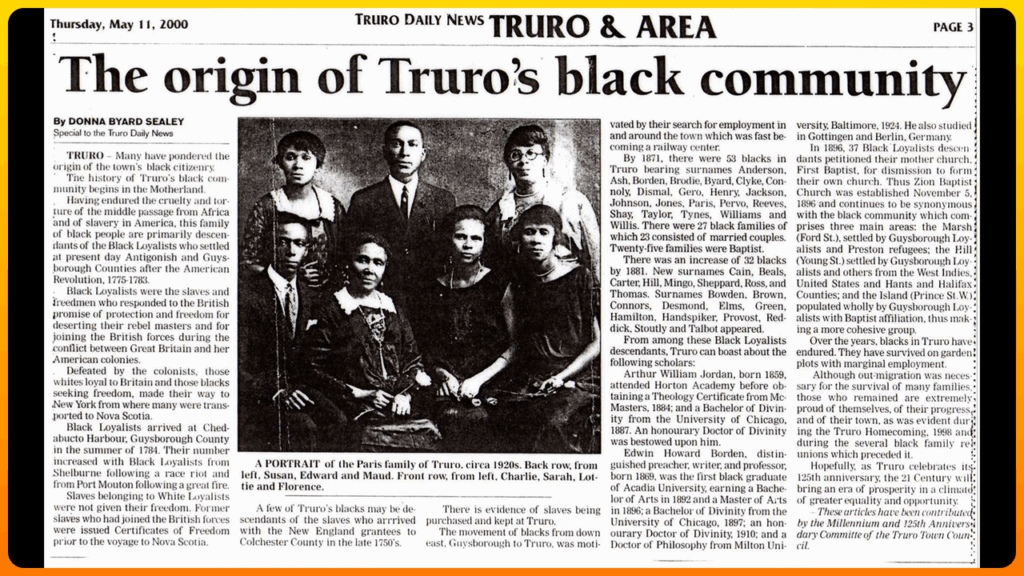
– descendants of Black Loyalists who arrived in the 1780s,
– descendants of Black Refugees from the War of 1812,
– or members of long-established African Nova Scotian communities that had existed for generations.
By the time the Colored Hockey League formed, many Black families in Nova Scotia had been here 80 to 100+ years. These were rooted communities — church-centered, intergenerational, and deeply local. Not newly arrived escapees.
Why accuracy actually strengthens the story
The truth is more powerful than the meme.
The real story isn’t that enslaved people fled north and accidentally invented hockey. It’s that free Black communities in Nova Scotia organized one of the earliest structured hockey leagues in the world, at a time when Black institutions were excluded from white sporting spaces.
That’s not a weaker claim. It’s a stronger one.
It shows organization, continuity, and community-building — not just survival, but creation.
Many players were absolutely descendants of enslaved people. But they were also church members, labourers, sons and grandsons of people who had already carved out space in this province long before Confederation.
A Black History Month takeaway
As Black History Month wraps up, this feels like a useful reminder.
If nothing else, we should be able to get the easy, verifiable facts right — dates, places, generations — especially when the history is this well documented. Accuracy doesn’t dilute pride. It grounds it.
Black history in Nova Scotia doesn’t need exaggeration to be extraordinary. It already is.


![Mapping Black Canada: Donna Paris on Migration, Memory, and Erased Communities [VIDEO]](https://blacknovascotia.ca/wp-content/uploads/2026/01/Donna-Paris-feature-photo-1024x538.png)
![iZrEAL performs ‘Black Scotians’ in Brixton, London, Aug 18. [VIDEO]](https://blacknovascotia.ca/wp-content/uploads/2023/08/Black-Scotians-by-iZrEAL-Jones-1024x538.png)
![Weymouth Falls receives community spirit award alongside reunion celebration [VIDEO]](https://blacknovascotia.ca/wp-content/uploads/2023/08/Henry-Bishop-1024x538.png)