The origin of Truro’s black community
By DONNA BYARD SEALEY
Special to the Truro Daily News
Thursday, May 11, 2000
TRURO DAILY NEWS — TRURO & AREA — Page 3
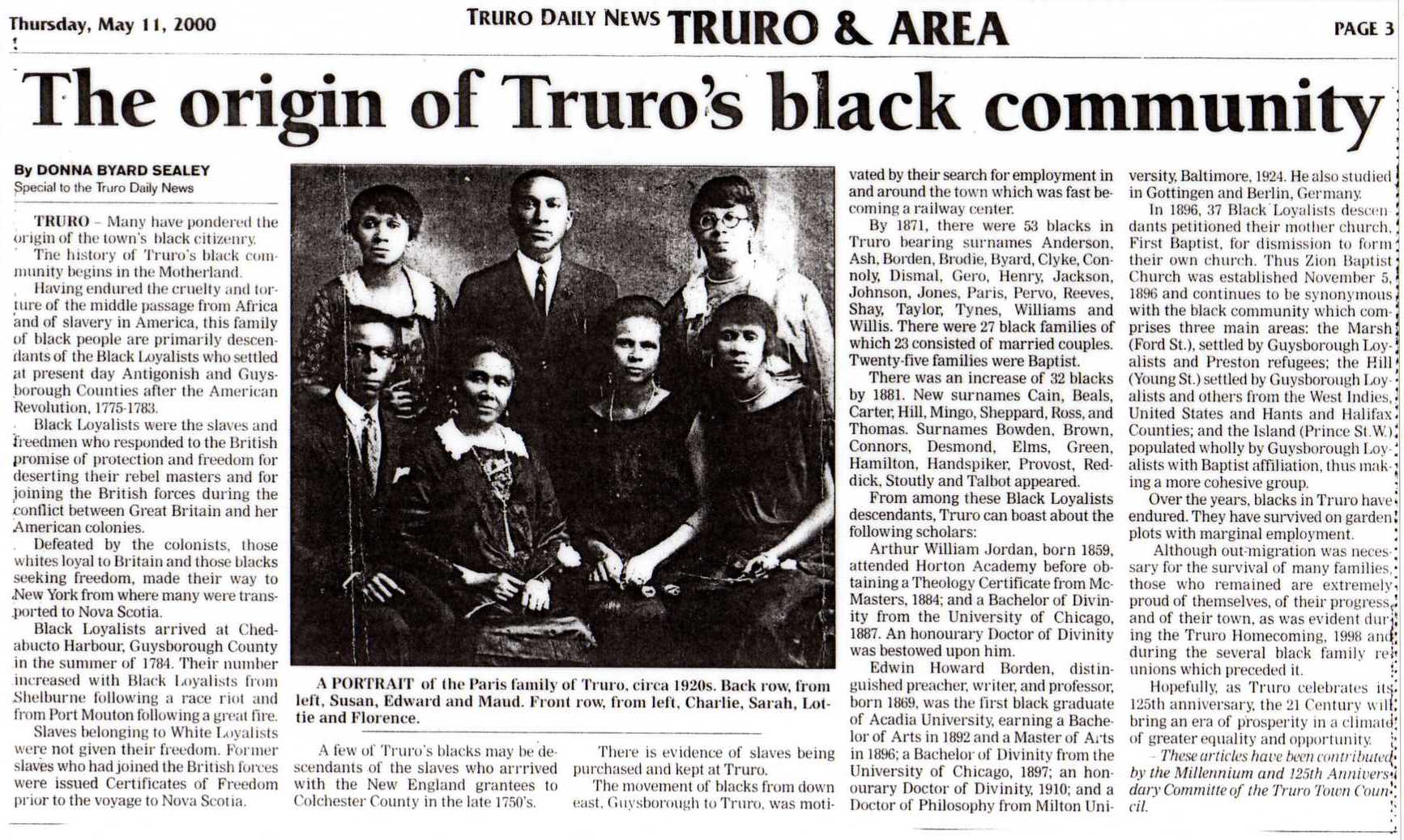
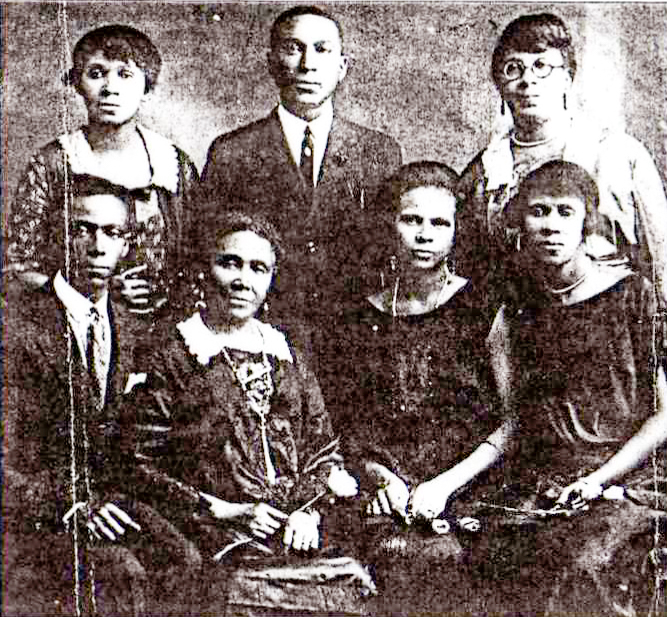
TRURO – Many have pondered the origin of the town’s black citizenry. The history of Truro’s black community begins in the northern Atlantic region during the passage from Africa and of slavery in America, the arrival of black people as enslaved persons of African descent.
The Black Loyalists responded to the British promise of protection and freedom for deserting their rebel masters and joining the British forces during the conflict between Great Britain and her American colonies.
Defeated by the colonists, those whites loyal to Britain and those blacks seeking freedom made their way to New York from where many were transported to Nova Scotia.
Black Loyalists arrived at Chedabucto Harbour, Guysborough County in the summer of 1784. Their numbers increased with black Loyalists from Shelburne following a race riot and from Port Mouton following a grant of land.
Slaves belonging to White Loyalists were not given their freedom. Former slaves who had joined the British forces were issued Certificates of Freedom prior to the voyage to Nova Scotia.
By 1871, there were 53 blacks in Truro bearing surnames Anderson, Ash, Borden, Brodie, Byard, Clyke, Connoly, Dismal, Gero, Henry, Jackson, Johnson, Jones, Paris, Pervo, Reeves, Shay, Taylor, Tynes, Williams and Willis. There were 27 black families of which 23 consisted of married couples. Twenty-five families were Baptists.
There was an increase of 32 blacks by 1881. New surnames Cain, Beals, Carter, Hill, Simmonds, Shepherd, Ross and Thomas appeared.
The Truro black population continued to grow, reaching 80 persons by 1891 and 100 by 1901.
Among those black Loyalists descendants, Truro can boast about the following scholars:
Arthur William Jordan, born 1859, attended Horton Academy before obtaining Theology Certificate from McMasters, 1884; Bachelor of Divinity from the University of Chicago, 1887; and an Honorary Doctor of Divinity was bestowed upon him.
Edwin Howard Borden, distinguished preacher, writer, and scholar-educator of Acadia University, earning a Bachelor of Arts degree in 1882 and a Master of Arts degree in 1886; a Bachelor of Divinity from the University of Chicago, 1897; an Honorary Doctor of Divinity, 1910; and a Doctor of Philosophy from Milton College.
(Column break — sentence continues)
…valued by their search for employment in and around the town which was fast becoming a railway centre.
By 1871, there were 53 blacks in Truro bearing surnames Anderson, Ash, Borden, Brodie, Byard, Clyke, John, Disman, Gray, Henry, Jackson, Johnson, Jones, Parry, Reeve, Shay, Taylor, Tymes, Williams and Willis. There were 27 black families of which 23 consisted of married couples. Twenty-five families were Baptists.
There was an increase of 32 blacks by 1881. New surnames Cain, Beals, Carter, Hill, Simmonds, Shepherd, Ross and Thomas appeared.
Over the years, blacks in Truro have endured. They have survived on garden plots with marginal employment. Although out-migration was necessary for the survival of many families, those who remained are extremely proud of themselves, of their progress, and of their town, as was evident during the Truro Homecoming, 1998 and during the several black family reunions which preceded it.
Truro celebrates its 125th anniversary, the 21st anniversary of the Millenium and the 125th anniversary Committee of the Truro Town
Council.