When Halifax revisits the Halifax Explosion each year, the stories we hear tend to be the ones already woven into the city’s official memory. What often sits outside that spotlight are the people whose work was indispensable — but who were never given the recognition they earned.
One of those people is Dr. Clement Courtenay Ligoure, a Black physician whose life and legacy were almost erased not because he lacked impact, but because the systems of his time were never built to honour a man like him.
From Trinidad to Canada — Building a Life Through Determination
Ligoure was born in Trinidad, sharp-minded and ambitious, with a clear sense that the opportunities he needed didn’t exist at home. Canada presented itself as a place where Black Caribbean students could pursue professional careers, and he took that promise seriously.
He studied medicine at Queen’s University in Kingston, earning an M.B. in 1914 and an M.D. in 1916 — an incredible achievement for a Black man in the early 20th century.
After graduating, he came to Halifax with purpose. This wasn’t a random stop. Halifax was becoming a focal point for Black organizing, and the No. 2 Construction Battalion was taking shape. He saw a community here that needed leadership, advocacy, and medical care.
And he showed up fully prepared to offer all three.
The Atlantic Advocate — More Than a Newspaper
He didn’t establish The Atlantic Advocate, but he became one of its most critical voices. The paper, founded by Wilfred DeCosta, was an outlet rooted in self-determination. When DeCosta left to serve with No. 2 Construction Battalion, Ligoure stepped into the role of editor and publisher.
Under his leadership, the Advocate became the instrument that helped mobilize Black men who were being denied the right to enlist. It wasn’t just reporting — it was strategy, organizing, and community-building in print form.
Through its pages, the Battalion grew. Through its voice, Black Nova Scotians asserted a right the government tried to deny them.
His Intended Role with the No. 2 Construction Battalion
Ligoure was not a passive supporter of the Battalion. He helped recruit, fundraise, and advocate. He also expected to join them overseas as their doctor.
He had the credentials.
He had the recommendation.
He had the respect of the men who trusted him with their lives.
The military’s refusal was not because a Black officer was unthinkable — Reverend William A. White had already been begrudgingly made a captain. The issue was that the military had no appetite for another Black officer, especially in a medical role that carried authority.
The “failed by one point” physical exam came at the last possible moment. A technicality that was treated as final. A decision wrapped in regulation but rooted in racism.
And so he stayed in Halifax.
Amanda Private Hospital — A Response to Exclusion
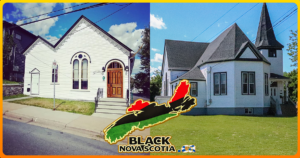
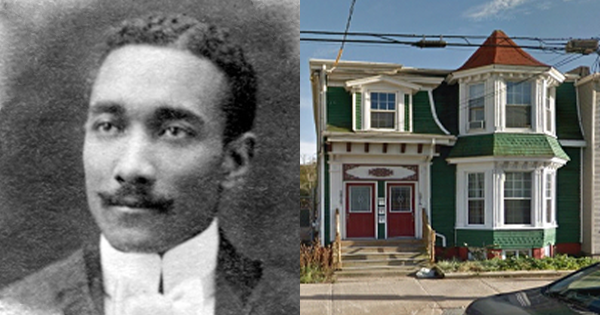
Denied privileges at white hospitals, Ligoure created his own: Amanda Private Hospital, located at 5812–14 North Street. It was part clinic, part home, and fully rooted in his refusal to let racism dictate who could access care.
From this building, months later, he would change the course of Halifax history.
December 6, 1917 — When the City Fell, He Stood Firm
When the Halifax Explosion tore through the city, Ligoure’s clinic shook like everything else. But he didn’t hesitate. He turned his private hospital into one of the most essential medical sites in the city.
People lined the street outside.
Children were carried in by neighbours.
Families who had been turned away elsewhere found help at his door.
For days, he barely slept. He stitched wounds by lamplight, set fractures with improvised tools, treated burns with whatever supplies he could scrape together, and kept going long after exhaustion would have stopped someone else.
There’s a reason eyewitness accounts speak of him with such awe:
He didn’t stop.
He didn’t close his doors.
He didn’t turn anyone away.
He was, by every measure, one of the central medical heroes of the Halifax Explosion.
Why His Name Disappeared
After the Explosion, Halifax rebuilt its public memory — and he was not included. His contributions were not preserved in official records, hospital histories, or military accounts.
This erasure wasn’t accidental. It reflected the same systemic forces that denied him hospital privileges and blocked him from the Battalion.
What’s important to understand is this:
Black communities didn’t preserve a continuous memory of him either.
Not because he wasn’t valued — but because he left no descendants, he died young, and the records surrounding his death vanished.
No obituary.
No funeral write-up.
No archived medical files.
Not even a clear record of how he died.
His story didn’t survive through uninterrupted community memory — it survived because Black researchers and artists went digging for it.
Rediscovery — The Work That Brought His Name Back to Light
Decades later, long after institutions had forgotten him, the work of community researchers began to unearth his story.
Writers like David Woods played an essential role in recovering what had been buried:
He located the surviving issues of The Atlantic Advocate.
He pieced together military correspondence about Ligoure’s blocked appointment.
He tracked down accounts of his Explosion work.
He confronted institutions with the missing chapters of their own history.
His efforts helped push the city, museums, and media to finally recognize Ligoure’s impact.
This rediscovery wasn’t a footnote — it was a rescue.
A Long Overdue Acknowledgment
In 2023, more than 100 years after the Explosion, the building that once housed Amanda Private Hospital was granted heritage status. The same walls that sheltered survivors, healed wounds, and kept families alive finally received the recognition they deserved.
It’s a small step toward acknowledging how deeply this man shaped Halifax in its darkest hour.
Why His Story Matters Now
Dr. Clement Ligoure was a physician, an organizer, a publisher, and a man who showed unwavering commitment in the face of direct racial exclusion.
He served a community that embraced him.
He saved a city that did not.
And he left behind a legacy powerful enough to survive decades of erasure.
Today, on the anniversary of the Halifax Explosion, we say his name with clarity and conviction:
Your work mattered.
Your courage mattered.
And your story will not be lost again.
His legacy belongs to Black Nova Scotia.
It belongs to Halifax.
It belongs to Canada.
And it’s time this country finally recognizes him on that level.