The Town of Truro is currently accepting nominations for its annual Heritage Award.
The award is meant to recognize projects that “celebrate, conserve, and enhance Truro’s natural and built heritage” — including work rooted in research, preservation, and community impact.
On its face, that’s straightforward.
But in light of recent events, it raises an obvious and unavoidable question:
What does Truro consider “heritage” — and how is it treated in practice?
A project that already fits the criteria
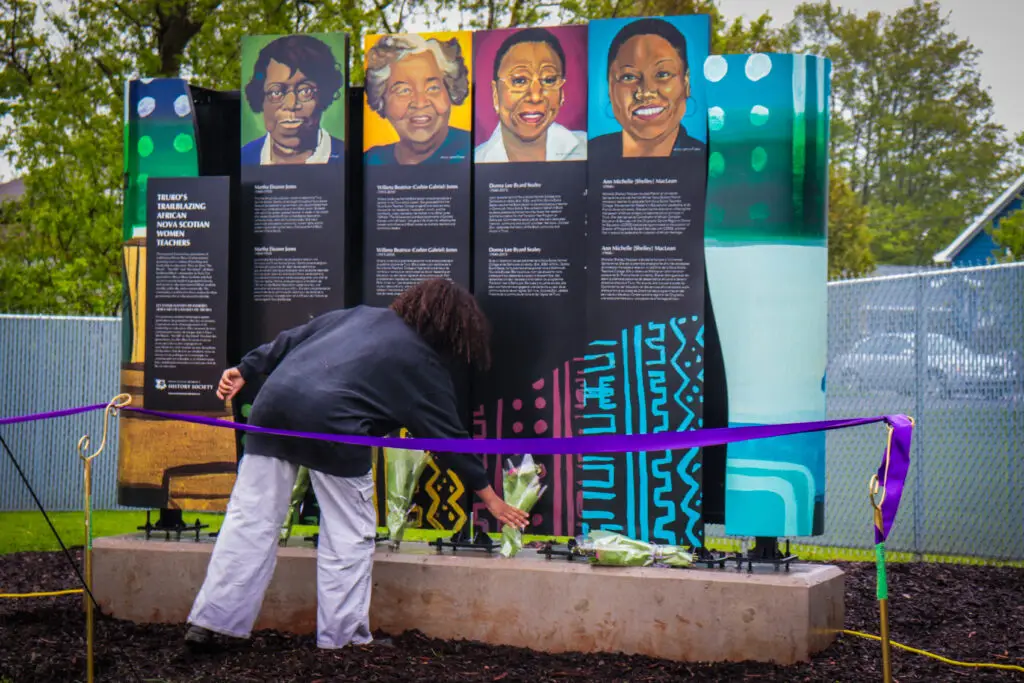
Less than a year ago, a public installation at the corner of Ford and Robie streets brought long-overdue recognition to African Nova Scotian women educators and community leaders.
The project:
– was initiated and researched over several years
– was funded and developed through significant volunteer effort
– involved community partnerships, elders, and descendants
– and resulted in a permanent public installation documenting Black history in Truro
It also involved individuals whose work in preserving African Nova Scotian history has been publicly recognized by the Town itself — including prior acknowledgement in council chambers.
By any reasonable definition, it fits the criteria being described in this year’s Heritage Award call.
What followed
After the installation was unveiled — and publicly referred to by name — the Town later reopened the naming of the site through a public process.
That process raised a number of concerns that have now been documented publicly:
– questions about communication with project partners
– uncertainty about how and when consultation occurred
– confusion around how participation was structured and advertised
– and a broader sense that a decision presented as complete had been reopened after the fact
It also raised a more specific concern: that individuals who played a central role in developing the project were not meaningfully engaged before that decision was made — despite having previously been publicly recognized by the Town for their contributions to local history.
The final name was ultimately selected through that process.
But the way it unfolded has left lingering questions — not about the value of the project itself, but about how it was handled.
Why this matters now
The Heritage Award call is asking residents to recognize work that preserves and honours Truro’s history.
At the same time, one of the most visible recent examples of that kind of work has been the subject of:
– a contested process
– inconsistent communication
– and public concern from those directly involved
That contrast is difficult to ignore.
A broader question
This isn’t about one award or one project.
It’s about alignment.
If a municipality is asking people to celebrate heritage work, there has to be consistency in how that work is treated — especially when it involves communities whose histories have not always been reflected in public spaces.
Recognition matters.
But so does process.
Time-sensitive note
Nominations for the Town of Truro Heritage Award close April 28, 2026.
For those considering a submission, this is an opportunity not just to highlight meaningful work — but to reflect on how that work is supported, recognized, and carried forward.
🔗 Submit a nomination here: https://survey123.arcgis.com/share/a1857c4651b74521aba16a2d64c3f6bb
Final note
The installation at Ford and Robie still stands.
The history it represents hasn’t changed.
But the way it has been handled is now part of that history too.